Notes from the network.

Practical networking lessons, lab notes, automation, and field-tested technical references.

SEARCH THE KNOWLEDGE BASE

Featured field notes

Focused write-ups built around one engineering question, one lab, and enough evidence to reproduce the result.

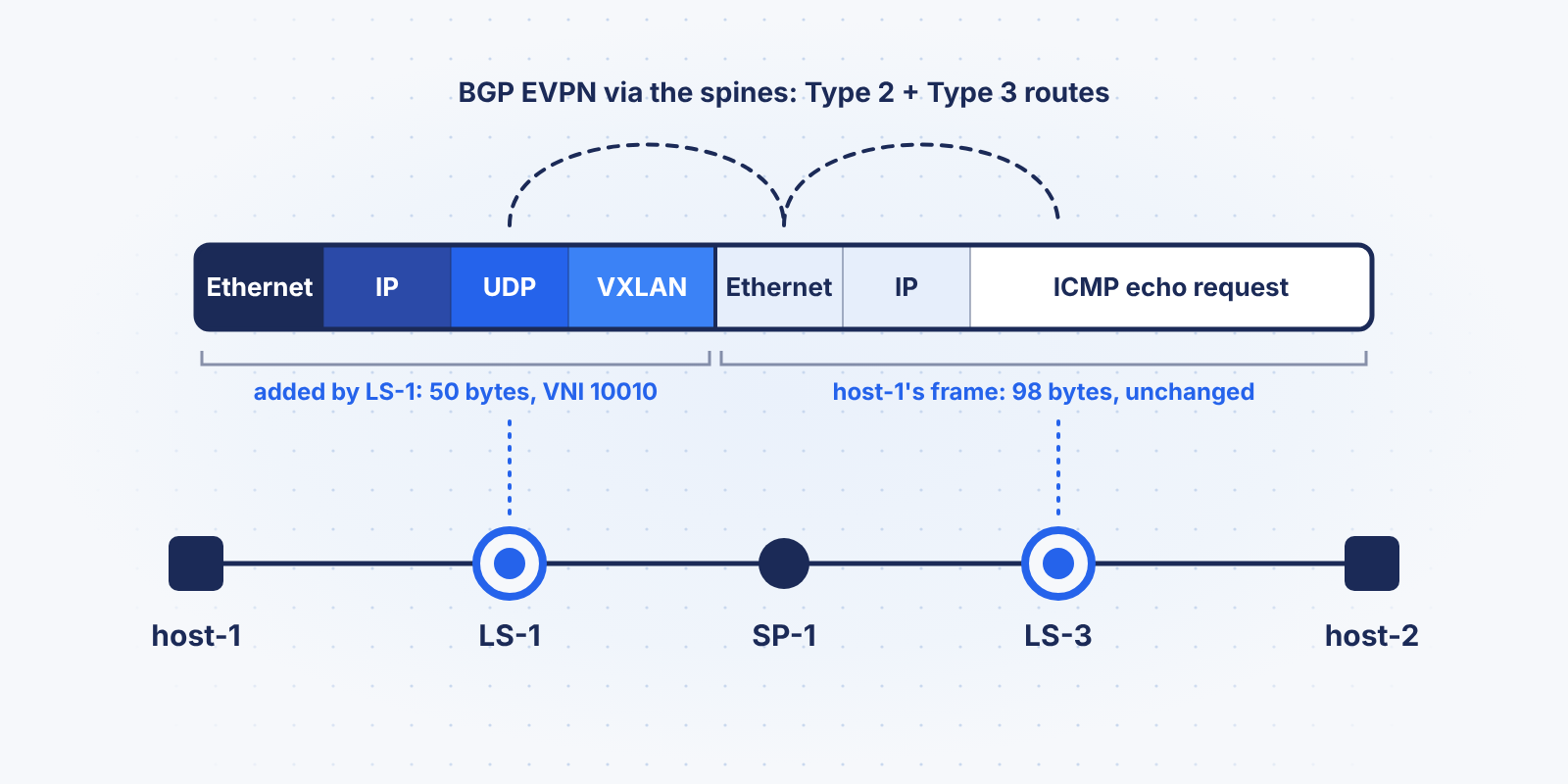
The path host-1 to LS-1 to SP-1 to LS-3 to host-2, with the VXLAN packet LS-1 builds: outer Ethernet, IP, UDP and VXLAN headers (50 bytes, VNI 10010) in front of host-1’s unchanged 98-byte frame, and BGP EVPN Type 2 and Type 3 routes carried via the spines.

DC Fabric Part 3: Building a Layer 2 EVPN Overlay

|

37 min read

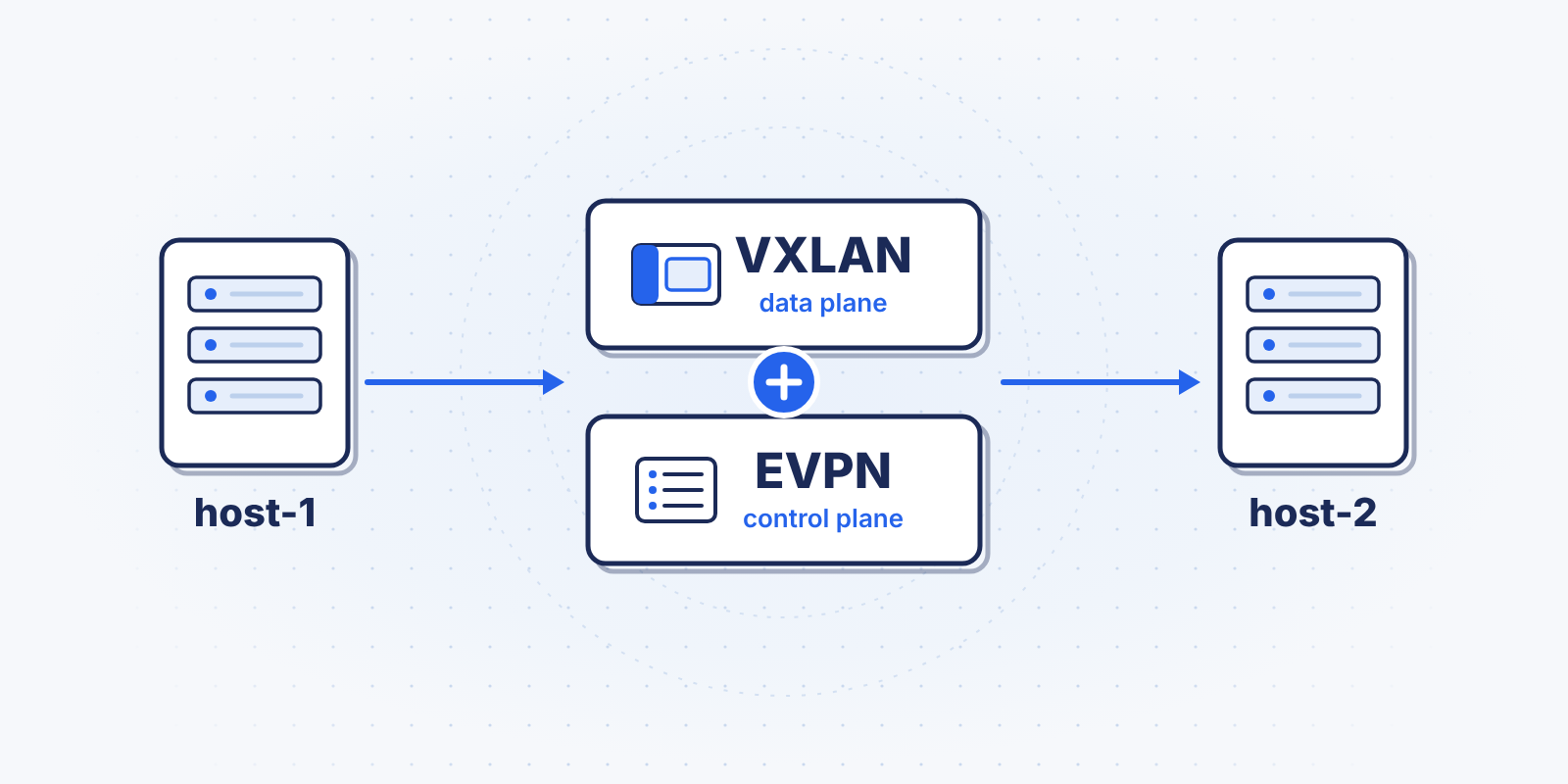
host-1 connected to host-2 through VXLAN, the data plane, plus EVPN, the control plane

DC Fabric Part 2: VXLAN EVPN Theory

|

19 min read

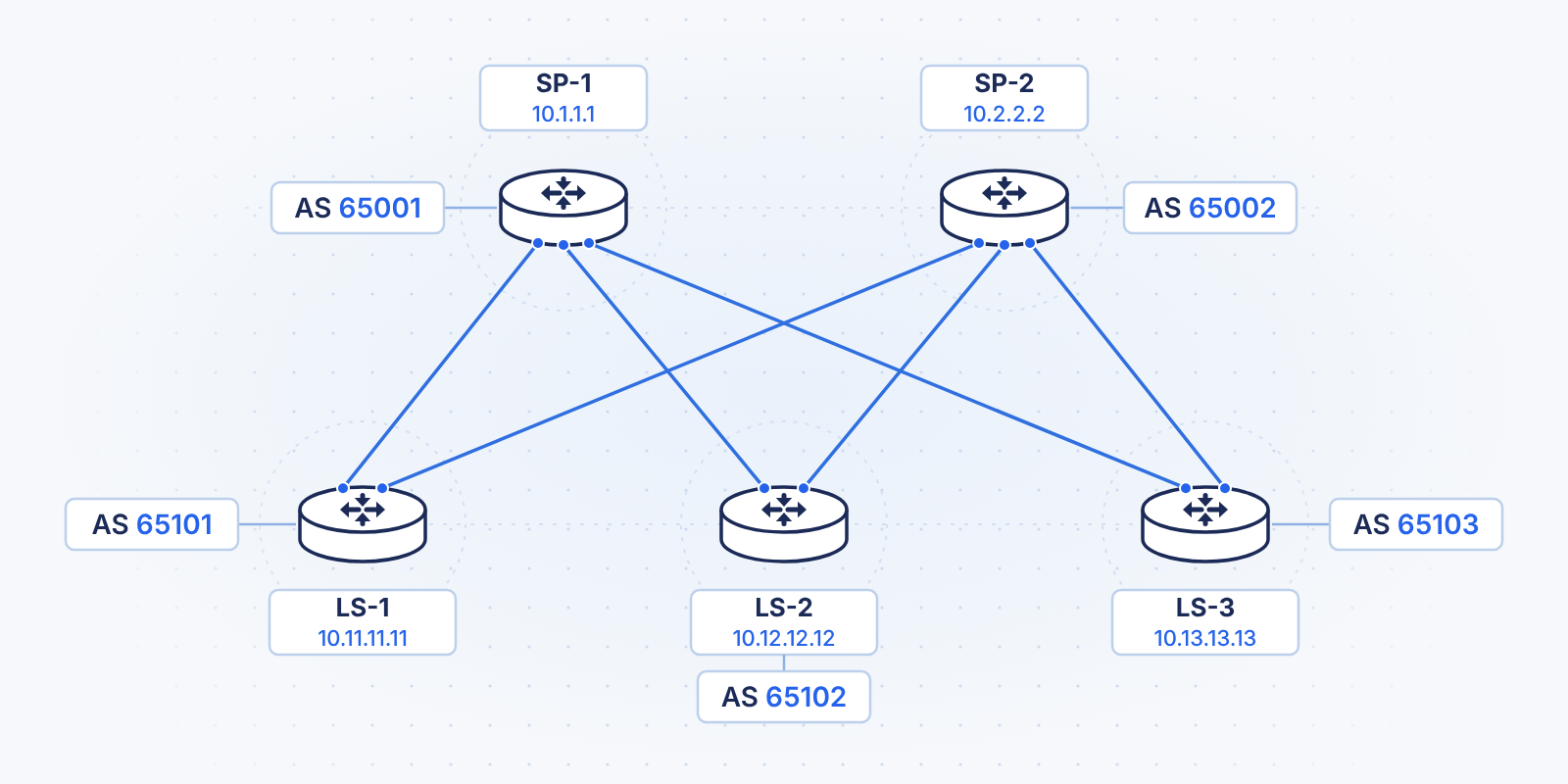
DC Fabric Part 1: Building an eBGP Spine-Leaf Underlay

|

36 min read

Latest from the notebook

Recent Posts

New lab notes, reference material, and practical write-ups across the network.

The path host-1 to LS-1 to SP-1 to LS-3 to host-2, with the VXLAN packet LS-1 builds: outer Ethernet, IP, UDP and VXLAN headers (50 bytes, VNI 10010) in front of host-1’s unchanged 98-byte frame, and BGP EVPN Type 2 and Type 3 routes carried via the spines.

DC Fabric Part 3: Building a Layer 2 EVPN Overlay

host-1 and host-2 share a subnet on different leaves of Part 1’s eBGP fabric. This post builds the VXLAN EVPN overlay that joins them, from VTEP loopbacks and EVPN sessions to the Type 2 and Type 3 routes and the packets on the wire.

|

37 min read

host-1 connected to host-2 through VXLAN, the data plane, plus EVPN, the control plane

DC Fabric Part 2: VXLAN EVPN Theory

Part 1’s eBGP fabric can’t connect two hosts in the same subnet on different leaves. This post covers how VXLAN carries their frames across the underlay, how EVPN advertises MACs in BGP, and how symmetric IRB routes between subnets.

|

19 min read

DC Fabric Part 1: Building an eBGP Spine-Leaf Underlay

Build and verify a five-node eBGP spine-leaf underlay using netlab and Arista cEOS, then explore route propagation, routing policy, ECMP forwarding, and path failure recovery.

|

36 min read

BGP Foundations Part 3: Building and Breaking Every Best-Path Tie

Build and break BGP best-path ties in a seven-router lab, testing Weight, Local Preference, AS_PATH, Origin, MED, eBGP vs. iBGP, IGP cost, multipath, route reflection, and the final tie-breakers that determine which route wins.
|

89 min read

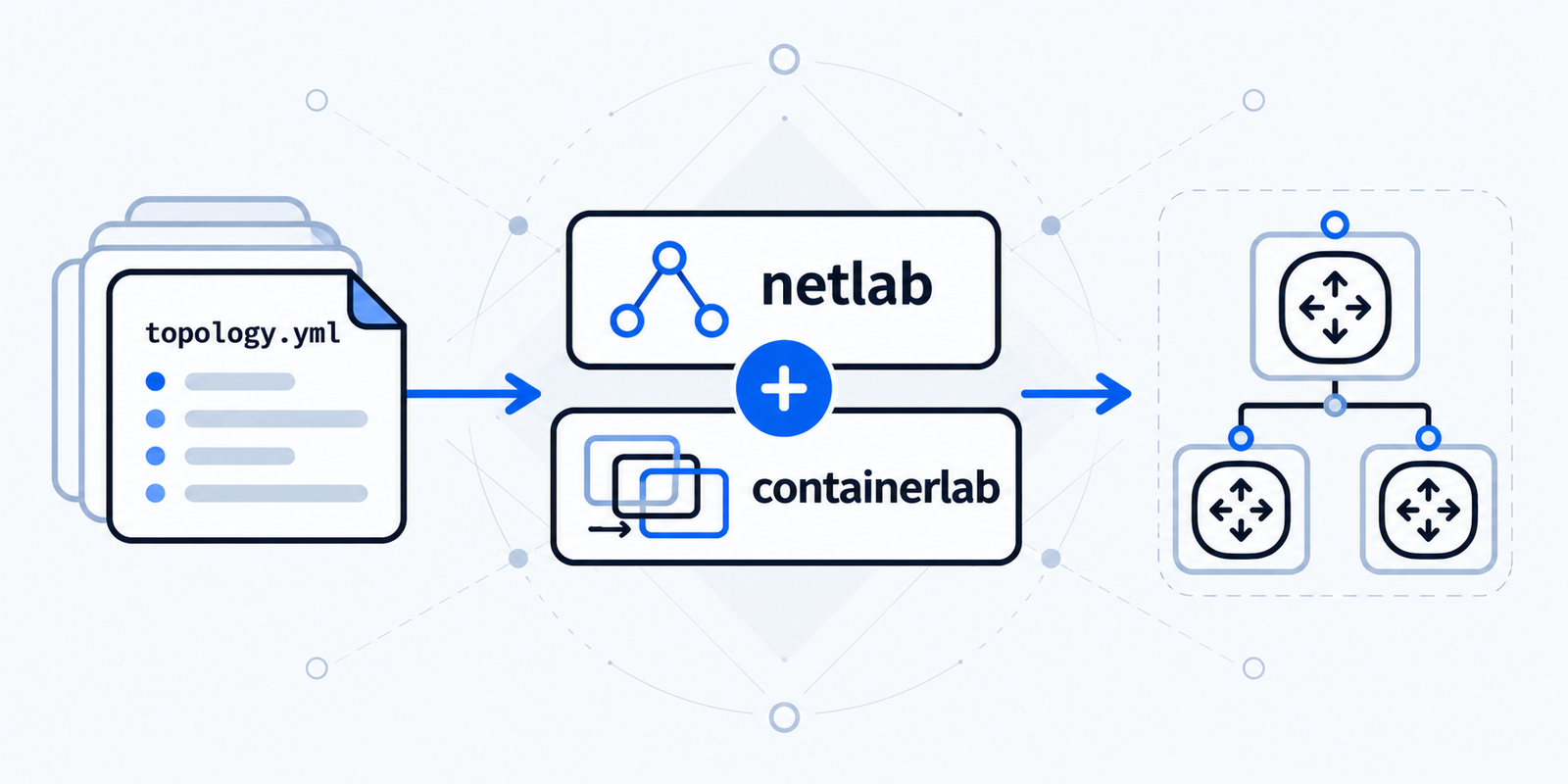
Building a Lightweight Network Lab with Netlab and Containerlab on Ubuntu 24.04

Build a lightweight network lab on Ubuntu using netlab, containerlab, Docker, and Cisco IOL for fast, repeatable topology deployment and testing.

|

13 min read

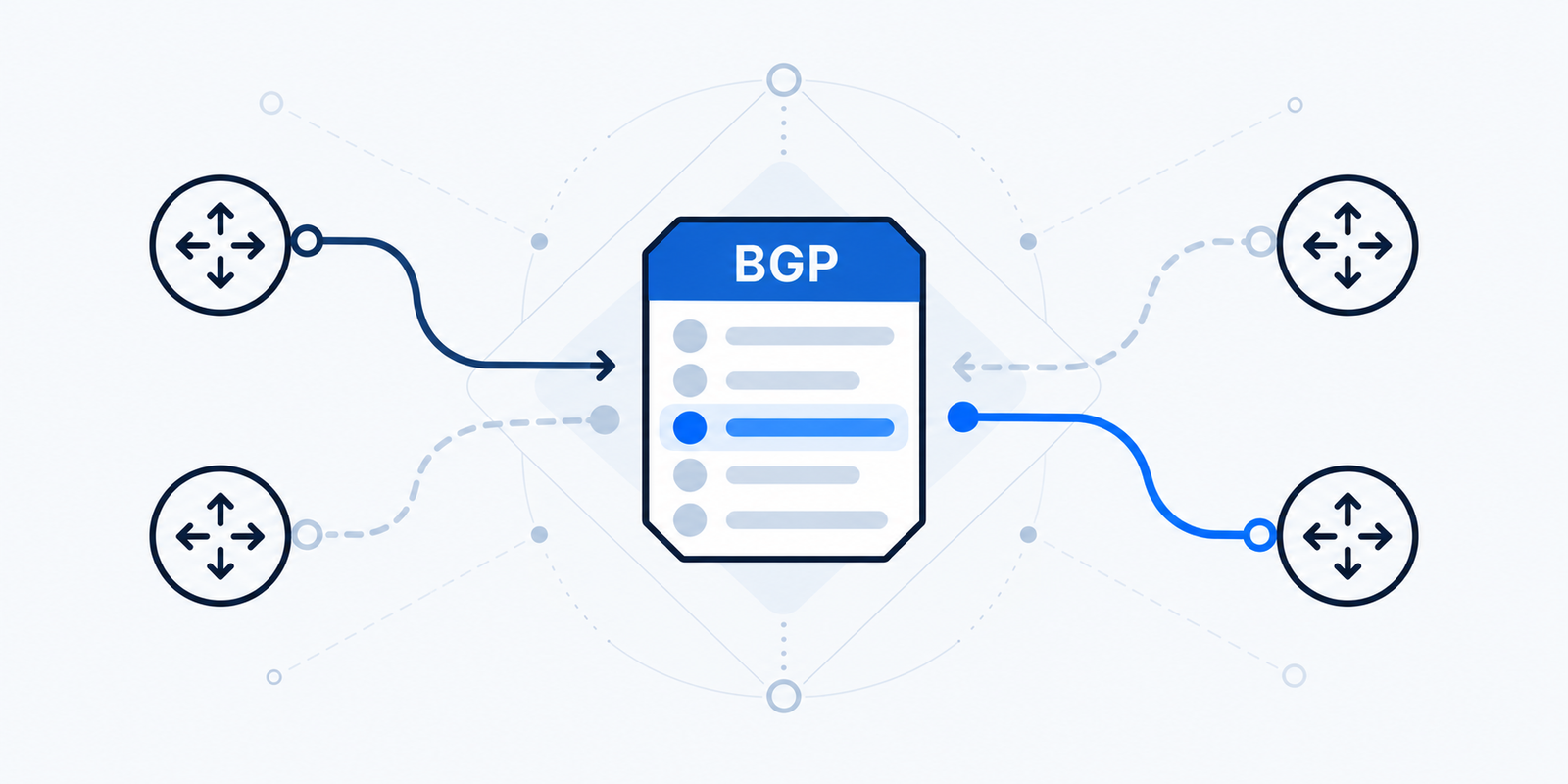
BGP Foundations Part 2: Following BGP Routes Across Multiple Autonomous Systems

Follow BGP routes across multiple autonomous systems and see how AS_PATH, route propagation, loop prevention, and best-path selection work in a real lab.

|

13 min read

Built for engineers

Evidence over abstraction.

Configuration, command output, packet behavior, and lab observations stay close to the explanation. The goal is documentation that can be revisited months later and still be useful.

Cisco IOSBGP
R1# show ip bgp ipv4 unicast
Network         Next Hop        Path
*> 10.3.3.3/32   10.12.12.2      65002 65003 i
*  10.3.3.3/32   10.14.14.2      65004 65003 i